What Is the Best Medical Mobility Equipment from China?

Choosing the best medical mobility equipment from China requires more than comparing prices. It requires clinical judgment, supplier verification, and careful attention to the user’s daily environment. A wheelchair that performs well in a factory showroom may struggle on uneven pavements, narrow hospital doors, or steep apartment ramps. Small details matter. Seat width, turning radius, brake response, battery range, and spare-part access can influence safety and independence.

Dr. Rory Cooper, a respected wheelchair researcher and disability advocate, supports the principle: “Nothing about us without us.” That idea should guide every purchasing decision. Users, therapists, caregivers, and procurement teams should evaluate equipment together. Reliable Chinese manufacturers may offer powered wheelchairs, rollators, patient lifts, scooters, and adjustable beds with competitive customization. However, attractive specifications do not prove dependable performance. Buyers should review quality-management records, product testing, warranty terms, user training, and after-sales support. Applicable medical-device requirements must also be checked in the destination market.

The best choice is rarely the cheapest option.

It is the safest practical fit.

A responsible comparison should examine real operating conditions. Can the battery last through a full day? Are replacement tires available locally? Does the control system remain responsive after repeated use? These questions expose weaknesses that polished catalog images can hide. Some products may still need better documentation or clearer maintenance guidance. That limitation deserves honest attention. This guide explores how to assess Chinese medical mobility equipment through usability, safety, durability, compliance, and long-term value. It aims to support informed decisions, not promote one supplier or one product category.

What Is the Best Medical Mobility Equipment from China?

Medical Mobility Equipment: Definition, Types, and Main Uses

What Is the Best Medical Mobility Equipment from China?

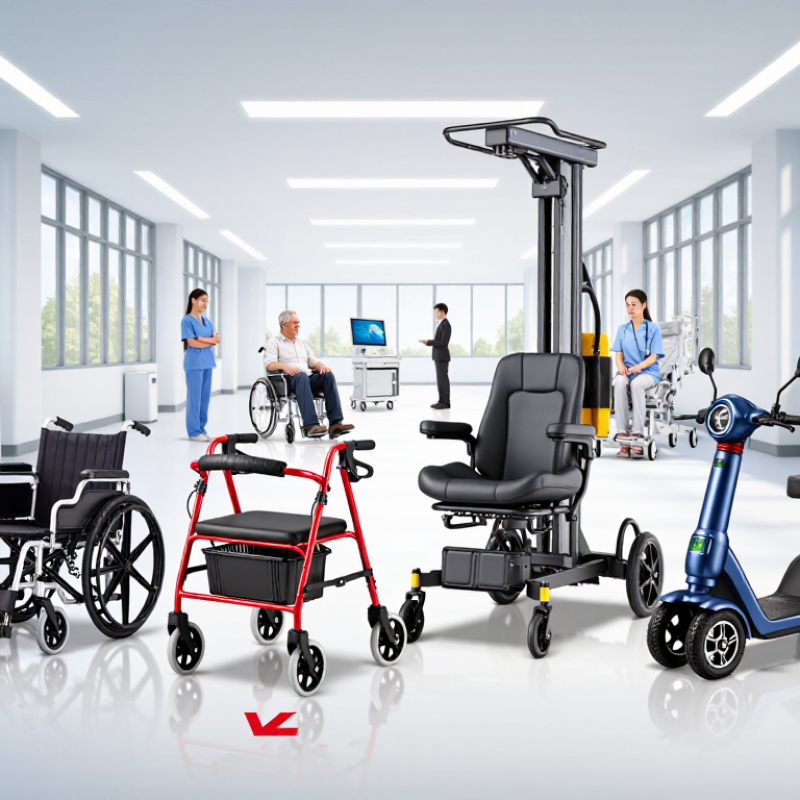
Medical mobility equipment supports safer movement, transfers, rehabilitation, and daily independence. Common types include manual wheelchairs, powered wheelchairs, walkers, rollators, transfer chairs, patient lifts, and mobility scooters. Each device serves a different need. A walker may help a recovering patient stand steadily, while a powered chair can support longer indoor or outdoor travel. The best choice depends on strength, balance, body size, environment, and caregiver support.

China offers many mobility equipment options, but price alone should not decide the purchase. Check frame strength, brake performance, battery protection, seat dimensions, adjustability, and maintenance access. For example, a rollator used on uneven hospital flooring needs stable wheels and reliable hand brakes. A patient lift requires carefully matched load capacity and compatible slings. Product documents should identify materials, testing information, cleaning instructions, and applicable medical-device requirements. A specification can look impressive and still feel uncomfortable after ten minutes. That detail is easy to overlook.

Tips: Measure doorways, elevators, and turning spaces before ordering. Ask for load-testing records and clear warranty terms. Request photos of controls, wheels, and folding joints. If possible, test posture and transfer height with a qualified therapist. Do not ignore caregiver feedback; equipment that is difficult to fold may remain unused. Recheck fit after delivery, because a small height error can affect balance, comfort, and safe movement.

What Is the Best Medical Mobility Equipment from China? — Definition, Types, and Main Uses
Equipment Type Definition Typical Users Main Uses Important Features to Evaluate Typical Care Setting Key Limitation or Safety Consideration
Manual Wheelchair A chair with large rear wheels that is propelled by the user or a caregiver. People with limited walking ability, temporary injuries, or long-term mobility disabilities. Indoor and outdoor transportation, hospital transfers, rehabilitation, and daily activities. Frame strength Seat width Braking system Foldability Cushion support Hospitals, nursing facilities, homes, rehabilitation centers, and public environments. Users may need upper-body strength or caregiver assistance. Correct seating and brake use are essential.
Powered Wheelchair A battery-powered mobility chair controlled by a joystick or another input device. People who cannot propel a manual wheelchair safely or efficiently. Independent indoor mobility, outdoor travel on suitable surfaces, and longer daily-use activities. Battery range Motor capacity Joystick control Seat adjustment Turning radius Homes, hospitals, care facilities, shopping areas, and accessible outdoor routes. Requires charging, regular maintenance, and sufficient cognitive and motor control for operation.
Mobility Scooter A battery-powered vehicle with a seat, handlebars or tiller, and a stable multi-wheel base. Adults who can sit upright and steer but have difficulty walking long distances. Community travel, shopping, neighborhood transport, and recreational mobility. Load capacity Ground clearance Battery performance Seat comfort Portability Homes, retirement communities, shopping centers, sidewalks, and accessible public spaces. Usually needs adequate posture, steering ability, vision, and space for turning. It is not intended for stairs.
Rollator Walker A wheeled walking aid commonly equipped with hand brakes, a seat, and a storage compartment. People who need balance support but can bear weight through their legs. Walking assistance, rest during outings, carrying small personal items, and fall-risk reduction. Adjustable handles Brake response Wheel stability Seat height Frame weight Homes, clinics, rehabilitation areas, shopping environments, and outdoor paths. Users must be able to operate the brakes. Pushing the device too far ahead can increase fall risk.
Standard Walking Frame A lightweight frame without wheels that provides stable support during assisted walking. People recovering from surgery, injury, or balance problems who need substantial support. Short-distance walking, early rehabilitation, transfers, and controlled indoor movement. Height adjustment Rubber tips Frame stability Grip comfort Weight Hospitals, rehabilitation centers, homes, and assisted-living environments. Requires lifting or repositioning with each step. It is less suitable for fast movement or uneven terrain.
Cane A single-point or multi-point handheld device that provides limited balance and weight support. People with mild balance impairment, weakness on one side, or partial lower-limb pain. Additional balance support during walking and assistance on level indoor or outdoor surfaces. Correct height Handle design Tip grip Shaft strength User hand function Homes, clinics, public areas, and short-distance community mobility. Provides less support than a walker. Incorrect height or worn tips can compromise stability.
Crutches Mobility aids that transfer part of the body weight from the legs to the hands and arms. People with temporary lower-limb injuries or restricted weight-bearing instructions. Walking while protecting an injured leg, post-operative rehabilitation, and stair assistance when appropriate. Height adjustment Handgrip position Cuff support Tip traction Weight rating Hospitals, rehabilitation centers, homes, and outdoor environments. Require good arm strength, coordination, and training. Incorrect use may cause falls or nerve pressure.
Patient Transfer Chair A compact chair designed mainly for short-distance transport and assisted transfers. People who can sit but cannot walk safely between rooms or departments. Transport within hospitals, clinics, airports, care facilities, and other controlled environments. Locking brakes Safety belt Footrests Compact width Push handles Hospitals, diagnostic centers, nursing facilities, and transportation areas. Generally intended for caregiver propulsion and short transfers rather than independent outdoor travel.
Patient Lift A mechanical or powered device used to transfer a person between a bed, chair, wheelchair, or other surface. People with very limited mobility or those unable to stand safely without assistance. Bed-to-chair transfers, bathing transfers, repositioning, and caregiver injury prevention. Safe working load Sling compatibility Base width Emergency lowering Caster stability Hospitals, nursing homes, home-care environments, and rehabilitation facilities. Requires trained operators, correct sling selection, inspection, and adequate clearance around the transfer area.
Stair Lift A powered seat or platform that travels along a rail installed beside a staircase. People who cannot safely climb stairs but can transfer onto a seat or platform. Independent or assisted movement between floors in buildings with stairs. Rail configuration Weight capacity Safety belt Obstruction sensors Battery backup Private homes, assisted-living residences, and selected care facilities. Requires suitable stair dimensions, professional installation, and safe transfers at the top and bottom landings.
Standing Aid A device that supports a person while rising from a seated position and transferring to another surface. People with partial leg strength who can participate in a supported standing transfer. Transfers between beds, chairs, wheelchairs, toilets, and other nearby surfaces. Knee support Footplate design Handle position Base stability Load capacity Hospitals, rehabilitation centers, home care, and long-term care facilities. Not suitable for people unable to bear weight or cooperate with the transfer process.

Key Factors for Evaluating Chinese Medical Mobility Equipment

What Is the Best Medical Mobility Equipment from China?

Key Factors for Evaluating Chinese Medical Mobility Equipment

The best equipment is not simply the cheapest option. It must match the user, care setting, and local safety requirements. A wheelchair used on hospital floors needs different features from one used across uneven home entrances. Check frame strength, brake response, turning radius, seat support, and maximum load. Test it over thresholds, ramps, and narrow doorways. Small details matter.

Supplier reliability deserves close attention. Request material specifications, inspection records, user instructions, and traceability documents. Confirm whether the manufacturer follows a documented quality system, such as ISO 13485, when appropriate for the product. Independent testing can support claims about load capacity, electrical safety, battery performance, and durability. Do not rely on photographs. They hide weak welds and poor finishing.

After-sales support is equally practical. Ask about spare parts, repair training, response times, and warranty handling in your market. For powered devices, check charging compatibility and battery replacement procedures. A sample may perform well while later production changes. I have learned that written controls matter more than confident promises. The lowest quotation can also create higher costs through delays, replacement parts, or repeated inspections. Evaluate the complete service path, not only the equipment itself.

Leading Chinese Mobility Equipment Categories and Their Features

China’s mobility equipment sector covers manual wheelchairs, powered wheelchairs, rollators, walkers, mobility scooters, and patient transfer aids. The WHO and UNICEF Global Report on Assistive Technology estimates that more than 2.5 billion people need at least one assistive product. Demand is therefore shaped by ageing, rehabilitation, and home care.

Manual wheelchairs remain practical for hospitals and daily transport. Aluminum frames reduce weight, while folding structures simplify storage. Powered wheelchairs add joystick control, adjustable seating, and rechargeable batteries. Rollators usually combine four wheels, hand brakes, a seat, and a storage basket. Small details matter. A narrow turning radius helps inside apartments. A stable frame helps on uneven pavements.

China-made mobility products often offer broad configuration choices and competitive production costs. However, buyers should inspect more than appearance. Check load capacity, brake response, battery documentation, charger compatibility, and spare-part availability. ISO 13485 certification can indicate a controlled medical-device quality system, but certification does not replace independent testing. The WHO’s 2022 disability report notes that about 1.3 billion people experience significant disability, making fit and usability essential rather than decorative features.

Procurement teams should also compare delivery records and service response times. A wheelchair that stops working after one month is not economical. I would question unusually low prices. They may hide weaker hinges, limited batteries, or incomplete instructions. Fit still deserves more attention, especially for users with pressure-injury risks or limited upper-body strength.

Leading Chinese Medical Mobility Equipment Categories

Representative rated user capacity by equipment category

Manual wheelchairs, powered wheelchairs, rollators, mobility scooters, and patient lifts are widely used mobility equipment categories manufactured in China. The figures show representative rated user capacities commonly found across international product specifications; actual capacity varies by model, configuration, and safety certification.

Safety Standards, Quality Checks, and Certification Requirements

Choosing medical mobility equipment from China requires more than comparing prices or product photographs. The WHO and UNICEF Global Report on Assistive Technology (2022) estimates that over 2.5 billion people need assistive products worldwide. That figure may exceed 3.5 billion by 2050. Demand is rising, but safety cannot be treated as a sales feature.

A serious supplier should provide ISO 13485 quality-management evidence, complete risk records, and traceable batch information. Wheelchairs should be assessed against ISO 7176 series requirements, including braking, stability, fatigue, and static strength. Walking aids may require ISO 11199 testing. Powered equipment also needs electrical and battery safety evaluations. For European sales, applicable Medical Device Regulation requirements and CE documentation must match the exact model. For the United States, FDA classification and submission rules depend on the device and intended use.

In practical inspections, I would check welds, frame alignment, caster movement, brake response, and charger temperature. Ask for recent laboratory reports, not only certificates. Verify the laboratory’s accreditation and report numbers. A certificate can look reassuring, yet it cannot replace a loaded ramp test or a 24-hour battery check. I have found paperwork gaps even when samples looked excellent. That is uncomfortable, but useful. Quality control should include incoming-material checks, final inspection records, packaging tests, and complaint tracking after shipment. Safety is proven through repeatable evidence, not polished promises.

How to Select a Suitable Chinese Medical Mobility Equipment Supplier

What Is the Best Medical Mobility Equipment from China?

Selecting a suitable Chinese medical mobility equipment supplier requires more than comparing prices. Define the user’s needs, including weight capacity, indoor space, terrain, transfer safety, and daily usage. Ask for technical drawings, material specifications, inspection records, and user manuals in clear English. A reliable supplier should explain limitations honestly, not promise that one device fits every patient.

Check the factory’s quality system and relevant certifications for your destination market. Confirm whether production follows documented procedures, incoming material checks, final inspections, and traceable batch records. Request recent test reports, but verify the testing laboratory and report dates. A polished website is not enough. An on-site or independent factory audit can reveal crowded work areas, weak packaging, or inconsistent assembly.

Test samples under realistic conditions. Measure braking distance, turning space, seat stability, battery endurance, and folding strength. Ask how spare parts, repairs, training, and warranty claims are handled after delivery. Response time matters when a mobility device supports daily independence. Keep every requirement in a written purchase specification, including acceptance criteria and packaging details. Some buyers focus too heavily on the lowest quotation. That can be a costly mistake. I would also reassess the supplier after the pilot order, because initial performance may hide production weaknesses. Reliable cooperation develops through evidence, clear communication, and repeated inspection.

©2024 Home Health Solutions by The Medicine Shoppe
cross linkedin facebook pinterest youtube rss twitter instagram facebook-blank rss-blank linkedin-blank pinterest youtube twitter instagram