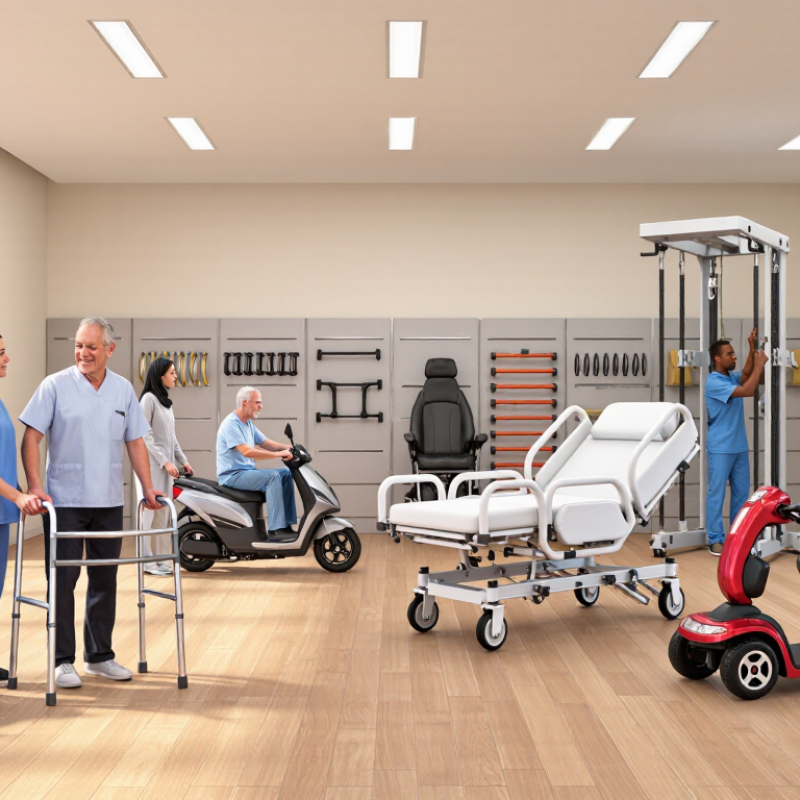
Choosing reliable medical mobility equipment suppliers requires more than comparing catalog prices. Hospitals, rehabilitation clinics, and home-care teams need products that perform safely in real settings. A wheelchair may cross uneven pavement, while a patient lift must support repeated transfers without confusing controls. This guide introduces leading suppliers worldwide and explains why their products deserve attention. The focus includes wheelchairs, walkers, scooters, patient lifts, standing aids, and related accessories.
Supplier evaluation combines practical experience with documented expertise. We consider product design, durability, adjustability, service networks, training, warranty terms, and replacement-part access. Certifications and quality systems matter, but they do not replace careful user feedback. A technically compliant device can still feel heavy, unstable, or difficult to maintain. Reliable companies explain weight limits, maintenance schedules, battery performance, and intended environments clearly. They also support clinicians and caregivers after purchase. Independent testing, transparent specifications, and responsive communication strengthen supplier credibility. Availability varies by country, so readers should verify local distributors, clinical requirements, and applicable standards before making decisions.
The phrase “top supplier” is not universal. A hospital may value fleet management, while a family may prioritize quiet operation and simple storage. This overview therefore compares strengths rather than declaring one global winner. Some information may change as products, ownership, and regional services evolve. That limitation deserves attention. Readers should consult qualified professionals and trial equipment when possible. A careful choice can improve mobility, reduce caregiver strain, and support safer daily routines.
Medical mobility equipment supports walking, transfers, positioning, and independent daily activities. The WHO and UNICEF Global Report on Assistive Technology (2022) estimates that over 2.5 billion people need assistive products. This figure may reach 3.5 billion by 2050.
Canes and crutches help patients with mild weakness, balance problems, or temporary injuries.
Walkers provide wider support for older adults and people recovering from stroke or joint surgery.
Manual wheelchairs suit users with limited walking tolerance, while powered wheelchairs help patients with severe weakness or poor endurance. Transfer boards, patient lifts, and standing aids reduce injury risks during bed-to-chair movement.
Clinical choice should follow a mobility assessment, not appearance or price. A physical therapist may check gait, muscle strength, posture, home layout, and pressure-injury risk.
For example, a lightweight wheelchair may improve transport but offer less postural support. A powered device can preserve energy for patients with multiple sclerosis or cardiopulmonary disease.
Yet, excessive reliance may reduce walking practice. That trade-off deserves discussion. The evidence is not perfectly uniform.
Tips:
Measure doorways, seat height, and turning space before selection. Adjust handles near the user’s wrist crease. Check brakes with the patient seated. Reassess after falls, surgery, or functional changes. WHO’s Priority Assistive Products List also stresses fitting, training, maintenance, and follow-up, areas that are often underestimated.
Top Medical Mobility Equipment Suppliers Worldwide
The global medical mobility equipment market is expanding through hospitals, rehabilitation centers, home care, and eldercare services. Demand differs by region, but safe movement remains the common priority. Aging populations support steady growth, while home-based treatment increases demand for compact equipment.
Key supplier categories include mobility manufacturers, medical distributors, rental providers, and refurbishment specialists. Product groups cover manual and powered wheelchairs, walkers, transfer lifts, standing aids, mobility scooters, ramps, and adjustable care beds. Rehabilitation suppliers often provide seating assessments, posture support, pressure management, and staff training. Rental services can help patients access short-term equipment after surgery or injury.
Fit matters more than appearance.
A reliable supplier checks doorway width, seat depth, turning space, user strength, and caregiver ability. For powered devices, battery range and charging access require practical testing. Hospitals may also evaluate cleaning procedures, spare parts, delivery times, and technician response. Regional standards, import rules, and clinical documentation can influence supplier selection.
Market comparisons are not always precise. Some reports combine consumer mobility products with clinical equipment, creating misleading conclusions. Supplier quality can also vary within one country. A lower purchase price may hide repair delays or poor fitting support. Buyers should review warranty terms, maintenance records, user feedback, and independent clinical guidance before making a decision.
| Equipment Category | Representative Products | Primary Users and Care Settings | Typical Supplier Category | Core Purchasing Criteria | Common Distribution Channels | Global Demand Characteristics | Relevant Standards and Compliance Considerations |
|---|---|---|---|---|---|---|---|
| Manual Wheelchairs | Standard wheelchairs, lightweight folding models, transport chairs, reclining and tilt-in-space models | Hospitals, rehabilitation centers, long-term care facilities, home care and community mobility | Specialized mobility manufacturers Medical-device distributors | Frame strength, seat width, patient weight capacity, adjustability, folding design, replacement parts and service support | Institutional tenders, rehabilitation distributors, home-care dealers and approved online medical channels | Broadest-use mobility category; demand is supported by aging populations, temporary mobility limitations and increased home-based care | Risk management, biocompatibility of patient-contact materials, braking performance, durability testing and applicable medical-device registration requirements |
| Powered Wheelchairs and Mobility Bases | Rear-wheel, mid-wheel and front-wheel drive power chairs; powered seating systems; modular mobility bases | Users with long-term mobility impairment, specialist rehabilitation and complex-care environments | Powered mobility specialists Rehabilitation technology suppliers | Battery range, drive control, seating customization, terrain capability, transportability, software reliability and after-sales service | Clinical assessment networks, specialist dealers, reimbursement-linked procurement and direct institutional supply | Higher-value segment with demand concentrated where rehabilitation services, funding systems and technical support are well established | Electrical safety, electromagnetic compatibility, battery and charger safety, software controls and wheelchair performance testing |
| Mobility Scooters | Travel scooters, compact indoor scooters, pavement scooters and heavy-duty outdoor scooters | Older adults and people requiring moderate assistance for outdoor or community mobility | Consumer medical-mobility suppliers Regional distributors | Turning radius, maximum user weight, battery capacity, ground clearance, portability, stability and local transport rules | Specialist retailers, home-care dealers, authorized e-commerce and rental programs | Strongest in markets with established home-care retail networks; product selection varies according to road, pavement and accessibility conditions | Electrical and mechanical safety, braking, stability, battery transport requirements and classification under local medical-device regulations |
| Walkers and Rollators | Walking frames, two-wheel walkers, four-wheel rollators, bariatric walkers and pediatric models | Post-surgical recovery, fall-risk reduction, outpatient rehabilitation, home care and elderly care | Rehabilitation equipment manufacturers General medical-supply distributors | Frame stability, height adjustment, handle ergonomics, brake performance, product weight and storage convenience | Pharmacies, hospital procurement, rehabilitation retailers, public-health programs and online medical stores | Large-volume, lower-complexity category with demand linked to falls prevention, orthopedic recovery and aging demographics | Load-bearing capacity, stability, braking, corrosion resistance, usability and product labeling requirements |
| Crutches and Canes | Underarm crutches, forearm crutches, quad canes, offset canes and adjustable walking sticks | Short-term injury recovery, chronic balance limitations, outpatient care and home use | Orthopedic-aid suppliers Pharmacy and medical-supply channels | Height range, grip comfort, tip traction, load capacity, corrosion resistance and ease of adjustment | Pharmacies, clinics, hospitals, rehabilitation retailers and general e-commerce | Widely distributed category with relatively low technical barriers and strong demand for affordable, readily available products | Structural strength, slip resistance, material safety, dimensional consistency and instructions for safe adjustment |
| Patient Transfer and Lifting Equipment | Mobile patient lifts, sit-to-stand devices, transfer boards, transfer chairs and ceiling-track systems | Hospitals, nursing facilities, home-care agencies and high-dependency care environments | Safe-patient-handling specialists Institutional healthcare suppliers | Safe working load, sling compatibility, caregiver ergonomics, battery endurance, cleaning requirements and staff training | Capital-equipment tenders, healthcare integrators, institutional contracts and specialist service providers | Demand is driven by caregiver injury prevention, workforce shortages, safe-handling policies and the expansion of long-term care | Load testing, emergency lowering, electrical safety, infection-control compatibility, sling safety and operator training |
| Patient Transport Chairs and Stretchers | Transport chairs, hospital wheelchairs, emergency stretchers, shower-transport chairs and bariatric transport systems | Acute-care hospitals, outpatient centers, diagnostic facilities, emergency departments and long-term care | Hospital-equipment manufacturers Healthcare procurement integrators | Manoeuvrability, infection-control design, load capacity, braking, lateral transfer features and compatibility with facility layouts | Public and private hospital tenders, group purchasing, direct institutional sales and service contracts | Purchasing is closely related to hospital capacity, facility refurbishment, patient-flow efficiency and infection-prevention requirements | Medical electrical safety where applicable, braking and stability, safe working load, cleanability and emergency-use requirements |
| Stair-Climbing and Evacuation Mobility Devices | Stair-climbing wheelchairs, evacuation chairs, tracked stair devices and emergency transfer systems | Hospitals, public buildings, transportation facilities, care homes and emergency-response teams | Specialist access-equipment suppliers Institutional safety-equipment distributors | Stair geometry compatibility, operator training, load rating, braking, storage footprint and evacuation procedures | Institutional safety tenders, building-access contractors, emergency-planning programs and specialist distributors | Niche category; demand is influenced by accessibility legislation, building risk assessments and emergency preparedness programs | Mechanical integrity, controlled descent, occupant restraint, load capacity, operator instructions and local fire-safety requirements |
| Pediatric Mobility Equipment | Pediatric wheelchairs, adaptive strollers, standing frames, gait trainers and postural-support systems | Pediatric rehabilitation, schools, community care, early-intervention programs and family homes | Specialist rehabilitation suppliers Clinical-assessment equipment providers | Growth adjustability, postural support, pressure management, caregiver handling, transport compatibility and replacement components | Clinical referral, public-health procurement, rehabilitation centers, education systems and specialist dealers | Demand depends on pediatric therapy access, early intervention, public reimbursement and the availability of trained clinical assessors | Postural-support safety, structural durability, pressure-care considerations, restraint design and individualized clinical assessment |
| Accessories, Spares and Service Support | Cushions, ramps, trays, anti-tip devices, batteries, chargers, wheels, seating components and maintenance services | All mobility-equipment users, caregivers, clinicians, hospitals and service workshops | Aftermarket specialists Authorized service networks | Compatibility, availability, installation quality, warranty coverage, maintenance intervals and total cost of ownership | Service centers, distributors, repair workshops, institutional contracts and specialized online channels | Recurring aftermarket revenue is supported by maintenance, replacement cycles, customization and the need to keep equipment operational | Compatibility verification, battery safety, electrical testing, cleaning protocols, traceability and maintenance documentation |

Medical mobility equipment suppliers vary widely by region, reflecting local healthcare systems, transport needs, and rehabilitation practices. In North America, established suppliers often provide wheelchairs, patient lifts, walkers, and powered mobility devices. Their strengths usually include broad product ranges, clinical consultations, training, and replacement-part support. Buyers should verify weight capacity, battery performance, maintenance access, and reimbursement requirements before purchasing.
European suppliers commonly emphasize ergonomic design, repairability, and compliance with detailed medical-device standards. Many serve hospitals, rehabilitation centers, and home-care providers through specialized distributors. In Germany, France, Italy, and the Nordic region, purchasers may look closely at documentation, user fitting, cleaning procedures, and long-term durability. Smaller suppliers can offer useful customization, but service coverage may differ between urban and rural areas.
In Asia-Pacific, supplier capabilities range from large manufacturing networks to experienced regional workshops. China, Japan, South Korea, Australia, and Southeast Asia each present different expectations for pricing, technology, and after-sales support. Hospitals should assess delivery timelines, technician qualifications, spare-parts availability, and local training. A low purchase price can hide future costs. No regional list is perfect. Supplier performance may change by city, product category, and service contract. In practice, conversations with therapists and users often reveal details that catalogs miss, such as difficult brake adjustments or uncomfortable seat angles.
Medical mobility equipment must meet clear product standards before it reaches hospitals, clinics, or home users. For wheelchairs and mobility scooters, ISO 7176 testing covers stability, braking, durability, and powered performance. Electrically powered devices may also require IEC 60601-1 and electromagnetic compatibility testing. These standards help assess real conditions, such as uneven floors, repeated transfers, and sudden braking.
Safety checks should match the user’s daily environment. Inspectors should verify weight limits, anti-tip protection, seat-belt strength, adjustable supports, and battery safeguards. A supplier should provide readable instructions, maintenance schedules, test reports, and spare-part information. Traceability matters. Serial numbers and production records can support recalls and service investigations. Small details matter.
Quality certification adds another layer of confidence. ISO 13485 indicates a structured medical-device quality management system, while ISO 14971 supports documented risk management. However, certification alone does not prove that every product performs well. Procurement teams should examine the certificate’s scope, issuing body, expiry date, and covered product category. Local market rules may also require registration, clinical evidence, or specific electrical testing. This step is often rushed, and that weakness deserves attention. Suppliers should welcome independent inspections, complaint reviews, and sample testing before large orders. A polished brochure is not evidence. Field performance is.
Comparing international medical mobility equipment suppliers requires more than checking product prices. I examine technical specifications, user weight limits, adjustment ranges, and operating environments. A wheelchair or transfer aid should match real clinical routines, not only showroom demonstrations. Ask for test reports, quality certifications, and clear instructions in the intended language. Small details matter.
Supplier reliability becomes visible after the purchase. Check manufacturing capacity, inspection procedures, delivery records, and spare-parts availability. Request documented response times for repairs and replacement components. A strong supplier explains warranty exclusions without hiding behind vague language. They should also support training for caregivers, therapists, and maintenance staff. One overlooked hinge can delay a busy ward.
Regulatory readiness must be assessed by destination market. Confirm product registration, labeling requirements, electrical safety evidence, and import documentation with qualified local professionals. Data protection also matters when powered equipment connects to software or monitoring systems. Compare total ownership cost, including freight, installation, servicing, batteries, and disposal planning. The cheapest quotation may become expensive within months. No supplier scores perfectly. I would record weaknesses openly, then judge whether the supplier responds honestly and corrects them. That response often reveals more than polished sales materials.
The global need for assistive technology is a key factor when comparing international mobility-equipment suppliers. Suppliers should be evaluated for production capacity, regulatory compliance, product safety, distribution coverage, after-sales service, and their ability to support long-term demand.
Source: World Health Organization and UNICEF, Global Report on Assistive Technology. Figures represent the estimated number of people requiring one or more assistive products worldwide.