10 Medical Recliner Lift Chair Buying Tips for Buyers

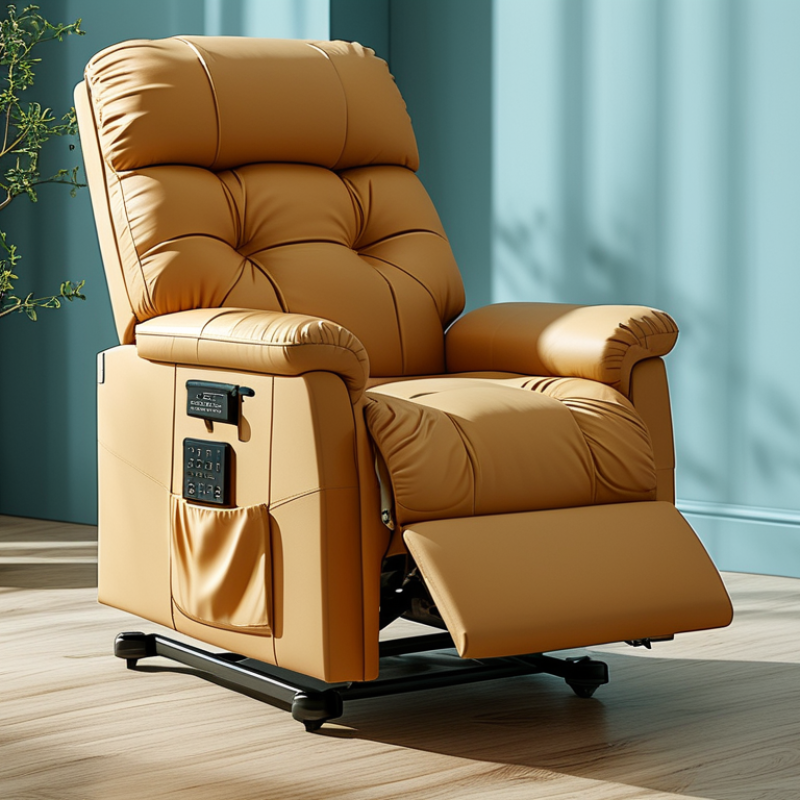
Choosing a medical recliner lift chair is more personal than comparing colors, prices, and advertised weight limits. The right model must match the user’s body, movement, room, and daily routine. A chair that lifts smoothly may still feel unstable if the seat is too deep. A soft cushion may feel comfortable briefly, then create difficult standing positions after several hours.

Rehabilitation engineer Rory Cooper, PhD, has said, “The best assistive technology is the technology that is used.” That idea matters here. A medical recliner lift chair should support real habits, not remain unused beside the television. Buyers should examine lift speed, remote control simplicity, footrest alignment, seat width, upholstery, battery backup, and cleaning requirements. Small details matter. Can the user reach the handset from a fully reclined position? Does the chair leave enough space near the wall? Can a caregiver operate it safely?

These ten buying tips focus on practical decisions often missed during online shopping. They consider posture, transfers, pressure relief, motor performance, warranty coverage, and service availability. Manufacturer claims deserve careful review. A higher price does not always mean better support. Personal testing is valuable, although it is not always possible. When visiting a showroom, sit for several minutes and try every position slowly. Ask a clinician or qualified therapist when pain, weakness, balance problems, or recent surgery affects the choice. No checklist replaces professional assessment. Still, a careful checklist can prevent an expensive mistake. Comfort is important, but safe, repeatable use matters more.

10 Medical Recliner Lift Chair Buying Tips for Buyers

Assess User Needs with CDC Data: 1 in 4 U.S. Adults Has a Disability

Choosing a medical recliner lift chair starts with the person, not the upholstery. The CDC reports that about one in four U.S. adults has a disability. Many experience mobility, strength, balance, or sensory limitations. A chair should reflect those differences. Start with function.

Measure the user’s height, hip width, leg length, and available floor space. Check the seat height and depth carefully. Feet should rest flat when seated. The lift motion should feel steady, not sudden. Look for simple controls, readable labels, emergency power support, and a weight capacity above the user’s current weight. Consider two-position, three-position, or near-flat reclining based on daily routines. Examine the fabric for easy cleaning and comfortable temperature control. Confirm the chair fits through doorways. Small details matter.

Ask a clinician or occupational therapist to review posture, transfers, and pressure concerns. A caregiver should test the handset and release process too. CDC data identifies disability prevalence, but it does not choose the right chair for every person. That requires direct assessment. A common buying mistake is focusing on massage features before transfer safety. Another is assuming a larger chair is automatically more comfortable. It may not be. Test the footrest, noise level, and return-to-sitting motion in person when possible. Keep the user’s changing needs in mind, because today’s perfect fit may become restrictive later.

Match Seat Dimensions, Weight Capacity, and Body Fit to User Measurements

Choosing a medical recliner lift chair starts with the user’s measurements, not the room’s appearance. Measure hip width while seated, then add about 2 inches for comfortable movement. Measure from the buttocks to the back of the knee. The seat should support the thigh without pressing behind the knee. Too much depth can leave the user sliding forward. That problem is easy to miss.

Seat height also matters. Measure from the floor to the user’s bent knee, with both feet flat. A suitable chair should let the feet rest naturally and keep the knees near hip level.

The Anthropometric Survey of U.S. Army Personnel, known as ANSUR II, recorded more than 90,000 body measurements. Its data shows why one “average” body size cannot guide every purchase. Older adults, shorter users, and people with limited mobility may need very different dimensions.

Check the chair’s weight capacity carefully. Include clothing, blankets, and any pressure caused during rising. Do not choose a capacity that barely exceeds body weight. BIFMA G1-2019 emphasizes designing furniture around user-size ranges, rather than a single average person. That principle applies here. A chair may look supportive but still feel unstable if the seat is too wide. Armrests should support the forearms without forcing the shoulders upward. Test the sitting and lifting positions slowly. The two-inch rule is helpful, not sacred. Recheck the measurements before ordering.

Verify Lift Motors, Electrical Safety, and UL/ETL Certification Standards

Before buying a medical recliner lift chair, inspect the lift motor in person or request clear service photos. It should raise the chair smoothly, without clicking, hesitation, or excessive heat. Ask for the motor’s rated load, duty cycle, replacement process, and overload protection. A quiet motor is helpful, but quiet does not prove safe.

Electrical protection deserves equal attention. Check the power cord for firm strain relief, intact insulation, and a grounded plug. Avoid models using loose adapters or unprotected extension cords. NFPA reports that electrical distribution and lighting equipment caused about 32,280 home fires annually from 2015 to 2019, with approximately 470 deaths and 1,100 injuries. A lift chair is not the only hazard, but its motor and control box still deserve serious inspection.

Look for a current UL Listed or ETL Listed mark, plus a file number or verifiable certification record. UL 962 or another applicable standard may apply, depending on the chair’s design and intended use. Confirm the certification covers the complete chair, not only its adapter. Intertek explains that an ETL mark indicates testing against applicable safety standards. Still, a certificate is not a guarantee of perfect installation. I would also test the emergency lowering function, inspect pinch points, and read recall notices. That small step is easy to miss.

10 Medical Recliner Lift Chair Buying Tips for Buyers - Verify Lift Motors, Electrical Safety, and UL/ETL Certification Standards

No. Buying Dimension What to Verify Reliable Evidence or Measurement Warning Signs
1 Lift-motor configuration Confirm whether the chair uses one or two motors and understand which sections each motor operates. A dual-motor design may allow more independent adjustment, but it is not automatically safer or stronger. Request the motor specification sheet, rated load, duty cycle, actuator type, and replacement-part information. Test the lift and recline functions under the stated user-weight limit. No motor rating, unexplained clicking or grinding, jerky movement, overheating, or a lift cycle that stops before reaching the advertised position.
2 Rated weight capacity Check the maximum user weight and whether the rating applies to the complete chair, lift mechanism, and reclining system. Compare the manufacturer’s documented capacity with the user’s weight, height, body shape, and transfer needs. Leave a sensible safety margin rather than selecting a chair at its limit. Capacity is listed only in marketing language, differs between the manual and product page, or excludes the lift mechanism.
3 Electrical rating and compatibility Verify the input voltage, frequency, power consumption, plug type, and power-adapter output before connecting the chair. Read the permanent rating label and compare it with the local electrical supply. Use only the supplied or explicitly approved power adapter and cord. Missing rating label, mismatched voltage, loose plug, damaged insulation, unauthorized adapter, or use of an extension cord contrary to the manual.
4 UL or ETL certification Look for a genuine recognized testing-laboratory mark covering the complete chair or the relevant electrical components, not merely a claim that the product is “tested.” Check the certification mark, control number or file reference, applicable standard, and product identity. Verify the listing in the certifier’s public directory when available. A generic “UL approved” statement, altered label, missing control number, certificate for a different model, or certification that covers only an unrelated adapter.
5 Applicable safety standard Determine which safety standard applies to the chair and its power system. Household and commercial furniture power systems may be evaluated under different requirements than medical electrical equipment. Ask for the exact standard edition and scope shown in the certification record. Do not treat a medical-use description as proof of medical-device certification. The seller cannot identify the standard, provides only a logo image, or implies that “medical recliner” automatically means regulated medical electrical equipment.
6 Grounding and protection Confirm whether the chair requires a grounded outlet and whether the design includes appropriate overcurrent, thermal, and electrical-shock protection. Follow the installation manual and inspect the plug, cord strain relief, fuse or protection information, and any required ground-fault protection for the installation location. Two-prong conversion without instructions, bypassed grounding, exposed wiring, warm connectors, repeated breaker trips, or an unexplained burning smell.
7 Emergency and battery backup Ask how the chair behaves during a power failure and whether an optional battery backup supports only one movement or multiple cycles. Review the backup battery type, operating instructions, replacement interval, charging method, and tested number of cycles. Treat backup power as an exit aid, not as a continuous power source. No documented backup procedure, swollen or leaking battery, battery connector that is difficult to access, or claims of unlimited emergency operation.
8 Frame, lift stability, and pinch points Check that the base remains stable during lifting and lowering, and identify moving gaps around the footrest, seat, armrests, and scissor mechanisms. Operate the chair on a level surface, observe the full travel path, and confirm that guards, covers, and anti-tip features remain in place. Rocking, frame flex, exposed gears, accessible pinch points, unstable movement, or operation that requires the user to pull on the armrests.
9 Fit, comfort, and transfer support Measure seat width, seat depth, seat height, armrest height, back angle, and required clearance. The user’s feet should be supported without excessive pressure behind the knees. Use the manufacturer’s dimensional drawing and test sitting, standing, and reclining positions. Consider professional assessment for users with mobility, balance, or pressure-injury concerns. User slides forward, cannot place both feet securely, needs to twist during transfer, or cannot reach the control without leaning dangerously.
10 Controls, maintenance, and service Evaluate control-button labeling, accessibility, cleaning instructions, warranty terms, motor replacement options, and technical support. Request the user manual, wiring or service guidance intended for technicians, warranty exclusions, response times, and a list of replaceable components. No manual, sealed non-serviceable parts with no support plan, unclear warranty coverage, or instructions to repair energized electrical components.

Buyer note: Certification marks and applicable standards vary by product type, market, and configuration. Always confirm the exact model, electrical rating, certification scope, installation requirements, and user manual before purchase or use.

Check CMS Rules: Medicare Coverage Usually Applies to the Lift Mechanism

When shopping for a medical recliner lift chair, check CMS rules before comparing fabrics, motors, or cup holders. Medicare usually covers the lift mechanism, not the entire recliner. Original Medicare may treat this mechanism as durable medical equipment when it is medically necessary. The chair must help you stand safely from a seated position. You generally must also be able to walk after standing. A physician’s order and supporting medical records are often required.

Coverage is not automatic. Medicare Advantage plans may use different requirements, suppliers, or approval steps. Ask whether the supplier is Medicare-enrolled and accepts assignment. Request a written estimate showing the covered mechanism, non-covered chair portion, deductible, and coinsurance. A phone promise is not enough. Rules can change, and local processing may differ. I would verify every detail with Medicare, your plan, and your clinician.

Tips: Measure the doorway and floor space first. Sit in the chair and test the lifting angle. Confirm the remote has large, readable buttons. Ask who handles repairs and whether service visits cost extra. Keep the prescription, claim details, and receipts together. Do not assume a more expensive chair has better coverage. That assumption is easy to make, but often wrong. A practical trial may reveal problems, such as a footrest that stops too close to your ankles.

Compare Recline Positions, Warranty Terms, Service Support, and Return Policies

Buying a medical recliner lift chair requires more than checking weight capacity or upholstery. Compare the actual recline positions, not only the advertised number. Some chairs stop at a gentle reading angle, while others support near-flat rest. During showroom testing, I check whether the footrest rises smoothly and whether the back supports the lower spine. A remote with large, separated buttons helps users with weak grip or limited vision. Small details matter.

Tip: Request the full warranty document before paying. Check coverage for the frame, motor, handset, and battery backup separately. A three-year frame warranty may hide shorter electrical coverage. Ask who pays shipping for defective parts. Also confirm whether in-home service covers your area. Phone support is useful, but a technician who can diagnose a clicking motor is better. Service response times should be written, if possible.

Read the return policy slowly, including restocking fees, pickup rules, and trial-period conditions. A chair may be returnable only when unused, which is unrealistic after a careful home test. Measure doorways, floor space, and the user’s seated position before delivery. I once underestimated hallway clearance; the chair fit the room but not the entrance. That mistake was avoidable. Ask how returns work if the lift mechanism fails during the trial. Keep invoices, packaging instructions, and service emails. Reliable support is part of the chair’s value, not an afterthought.

10 Medical Recliner Lift Chair Buying Tips

Suggested evaluation weights for comparing recline positions, warranty terms, service support, return policies, and essential safety factors.

The percentages represent a practical 100-point buyer checklist rather than company or brand ratings. Prioritize comfort, safe lifting performance, clear warranty coverage, responsive service, and a reasonable return policy before purchasing.

©2024 Home Health Solutions by The Medicine Shoppe
cross linkedin facebook pinterest youtube rss twitter instagram facebook-blank rss-blank linkedin-blank pinterest youtube twitter instagram